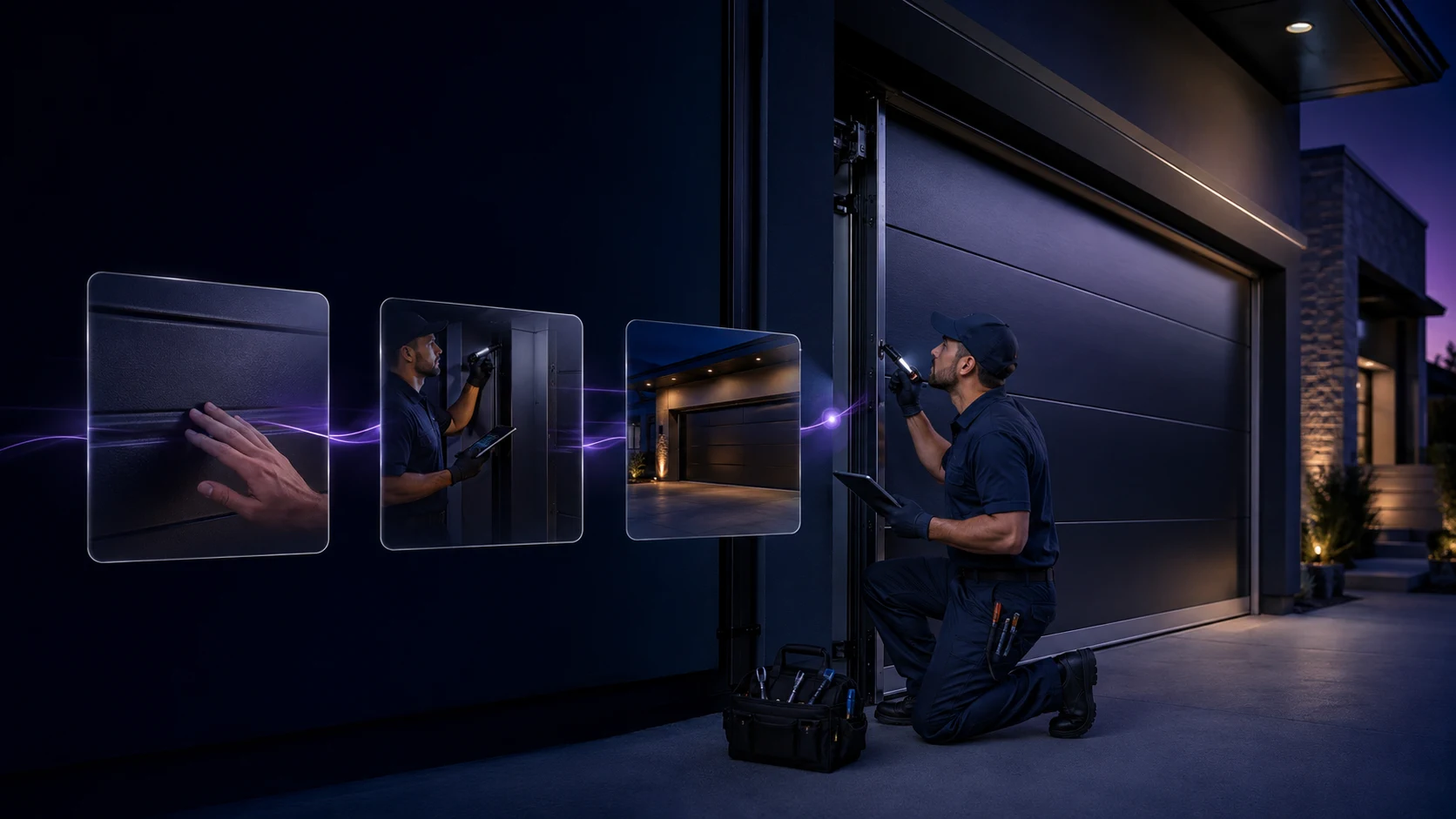
Maintenance is often a footnote on a garage door website. That leaves preventive-service searches to generic checklists, attracts do-it-yourself traffic, and misses a natural reason for a satisfied customer to return. A focused tune-up page can set a safe boundary, explain the professional service, and earn qualified appointments without promising that maintenance prevents every failure.
01
The answer: make maintenance a real service journey
Build one dedicated maintenance or tune-up page when the company genuinely sells that service. Explain who the appointment is for, what the technician evaluates, what is included, how safety concerns are handled, and how to book. Do not hide the service on the repair page or inflate a short lubrication visit into a vague safety promise.
Preventive intent is different from emergency intent. The visitor may have no current failure. They may be preparing for seasonal use, responding to a new sound, maintaining a recently purchased home, or trying to understand a manufacturer recommendation. A page that immediately pushes spring replacement or uses breakdown imagery can make a routine customer feel manipulated.
EdgeLocal viewpoint: maintenance SEO is valuable when it creates qualified tune-ups, truthful repair opportunities, retained customers, and profitable repeat work. Rankings for checklist searches are incomplete if the visitor only wanted hazardous do-it-yourself instructions or lives outside the service area.
02
Diagnose the revenue leak before writing more copy
Start with real operations. Confirm the tune-up scope, service area, appointment length, qualifications where applicable, pricing model, reminders, and what happens when the technician finds a repair need. If the team cannot describe the service consistently, the website cannot set a reliable expectation.
Then review calls and intake records. Maintenance demand may appear as ‘annual service,’ ‘garage door tune-up,’ ‘inspection,’ ‘winter check,’ ‘noisy door,’ or ‘just moved in.’ Separate people seeking routine care from urgent symptoms and from shoppers who only want parts or instructions. That classification prevents the page from becoming a catch-all.
Map the leak from search to completed work: page visit, qualified inquiry, booked tune-up, completed appointment, authorized follow-on work, and later return. Use the call-tracking governance guide to protect the permanent number, and the service-radius analysis to keep demand inside profitable coverage.
03
Publish the professional scope without teaching risky repairs
Describe the categories a trained technician may review: door and opener operation, visible wear or damage, hardware, safety systems, weather seals, manufacturer-specified maintenance, findings, and final testing. Publish only work the company performs, and distinguish maintenance from repairs that require diagnosis, pricing, and authorization.
DASMA says model-specific safety information belongs in the owner’s manual and states that an annual visit from a trained technician can help keep a system operating safely and smoothly. Its sectional-door checklist warns that repairs and adjustments should be performed by a trained technician. That does not justify promising that annual service prevents every breakdown.
Keep high-tension work out of homeowner instructions. Do not tell readers to adjust, loosen, replace, or test springs, cables, bottom brackets, tracks, or door balance without model-specific professional guidance. If the door is uneven, off track, difficult to move, has a broken spring or cable, or behaves unpredictably, route the visitor to qualified service. The broken-spring safety guide provides a safer urgent-intent path.
04
Answer the questions that determine whether someone books
Explain what happens before, during, and after the visit. Ask for safely visible brand details, symptoms, recent impact or power events, location, previous service, and preferred timing. State whether the fee includes inspection, maintenance, testing, or written findings, and explain how additional work is quoted.
Avoid a universal maintenance interval. Usage, climate, door material, system condition, manufacturer instructions, and prior findings can change the appropriate schedule. If the company offers seasonal or annual reminders, present them as permission-based service convenience, not proof that failure is imminent. Never use countdown timers, fabricated ‘technician in your area’ messages, or unsupported safety claims.
Add authentic evidence: real technicians, an accurate checklist, relevant reviews, service documentation, and only verifiable credentials or manufacturer relationships. Link price questions to the cost-page framework and opener symptoms to the opener service-page guide, rather than forcing every concern onto this page.
05
Build repeat service without turning the page into spam
With the customer’s permission, record the service date, system details, completed work, findings, manufacturer guidance, and an appropriate follow-up window. Send useful reminders that identify the company, explain why they were sent, and make rescheduling or opting out easy.
Use the page as the stable reminder destination. Keep its scope, coverage, phone, hours, and booking process aligned with the Google Business Profile. Google says helpful content should be original, substantial, trustworthy, and created for people. One page with operating evidence is more defensible than city-and-season copies of the same checklist.
Structured data must match the visible page and does not guarantee a rich result. Mark up the real local business and page facts; do not invent ratings, offers, prices, availability, or maintenance intervals. If a distinct market has unique staffing, coverage, proof, and customer information, connect it through the location-page framework. Otherwise, keep authority concentrated on one excellent tune-up page.
06
Measure retention, not just first-touch leads
Track entrances, calls, forms, qualified inquiries, booked tune-ups, completed appointments, approved follow-on repairs, average ticket, gross profit, repeat customers, reminder opt-outs, and lost reasons. Keep preventive work separate from urgent repair so a tune-up is not undervalued when it retains a customer or identifies authorized work.
Review the journey monthly. If informational traffic dominates, clarify booking intent. If callers misunderstand the service, revise the checklist and price explanation. Tighten geographic messaging when distant leads convert poorly, and improve consent or frequency when reminders cause complaints.
Use the ROI calculator to model qualified demand, then connect the page to the broader garage door SEO system. The goal is not to manufacture urgency. It is to make routine care easy to understand, safe to request, and valuable enough that a customer chooses the company again.
Reviewed August 2, 2026. DASMA and Clopay sources support the maintenance and safety facts; Google sources support the content and structured-data guidance. The Maintenance Intent Board and commercial recommendations are EdgeLocal analysis. Follow the specific manufacturer manual and qualified professional guidance. Maintenance, search visibility, calls, retained customers, and revenue are not guaranteed.
Sources and methodology
Sources checked for this guide
Source links support the platform, search, or safety facts stated above. The diagnostic framework and commercial recommendations are EdgeLocal analysis.
Value repeat maintenance demand
Measure tune-ups by the customers and work they retain.
Use the free ROI calculator with qualified maintenance leads, booking rate, average ticket, follow-on work, gross margin, and plan cost. A preventive-service page should create useful appointments—not just informational traffic.
Model the maintenance opportunity