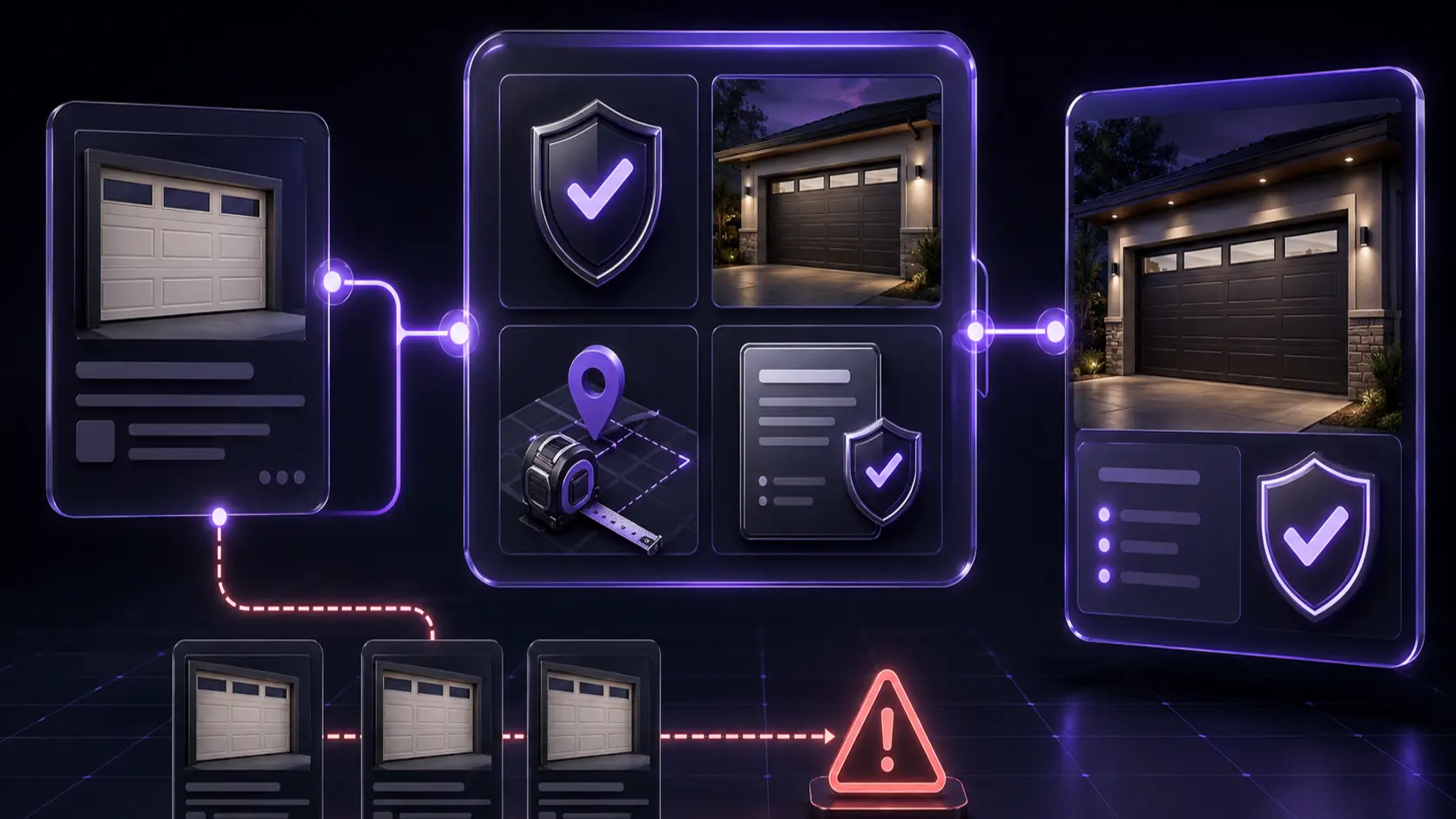
A garage door dealer adds a page for every manufacturer and collection it can name. Most pages repeat catalog copy, show borrowed product images, and end with a generic phone number. The company may technically mention the brand, but the shopper still cannot tell whether it sells that exact line, is authorized to represent it, can install it locally, or can help choose a suitable configuration. A useful brand page closes that evidence gap.
01
The answer: prove the local buying relationship
A manufacturer page should do more than confirm that a product exists. It should explain the company's real relationship to the brand, which products it can currently quote, how those options fit local homes and operating conditions, what professional measurement or installation involves, and where product coverage ends and installer responsibility begins.
Manufacturer dealer locators show why this matters. Clopay distinguishes authorized dealer levels and ties certain installation-warranty information to those designations. Amarr says its doors are sold primarily through independent professional dealers and identifies dealer designations in its locator. Overhead Door directs buyers to authorized distributors for product selection, installation, repair, and service. The exact relationship is a buyer fact, not a keyword variation.
EdgeLocal viewpoint: brand demand becomes valuable only when the page connects an accurate product claim to a serviceable local estimate. Rankings for a manufacturer's name are incomplete if the company cannot support the claim, source the product, or turn the visit into suitable installed work.
02
Do not publish a catalog mirror
Copying a manufacturer's collection description and changing the city name produces a weak decision page. The original source already owns the product story. A local dealer's useful contribution is different: availability, professional assessment, real installations, climate and design context, service coverage, workmanship, scheduling, and the questions local buyers repeatedly ask before approving a quote.
Google's people-first content guidance asks whether a page demonstrates first-hand expertise, adds substantial value, and leaves the reader able to accomplish a goal. Its SEO Starter Guide notes that duplicate content is not automatically a spam violation, but can create a poor experience and waste crawling resources. The practical issue is not a duplicate-content penalty slogan; it is that interchangeable pages give buyers and search systems little reason to choose the dealer's version.
Use manufacturer wording only when accuracy requires it, keep the statement attributed, and add original local evidence around it. Do not invent an authorized designation, certification, territory, showroom, stocking claim, lead time, warranty, or model availability. If the relationship changes, update the page promptly instead of preserving an outdated badge for search traffic.
03
Choose a page hierarchy that matches real inventory and demand
Most dealers do not need a separate indexable page for every color, panel pattern, window, size, and collection. Start with one strong manufacturer page when the company genuinely sells a meaningful portion of the line. Create a separate collection or model page only when it has distinct search demand, specifications, installed examples, buyer questions, and a different decision path. Otherwise, keep variants in one comparison interface.
Connect the brand page to the broader replacement buyer journey. Send thermal-performance questions to the insulation decision guide, coverage questions to the warranty framework, and proof seekers to the job-photo system. That hierarchy lets each page own one decision instead of competing with near-duplicates.
Do not clone the same manufacturer page across every city. One useful brand page can explain the product relationship, while legitimate location pages establish distinct local operations, proof, and coverage. A city name is not new product evidence.
04
Show the product facts a local estimator can defend
Build a comparison from current manufacturer documents and the configurations the company can actually quote. Useful fields may include construction, materials, insulation type, published thermal rating, window and finish choices, wind-load options when relevant, approximate decision factors, manufacturer warranty owner, installer workmanship coverage, and whether professional measurement is required before confirming fit or price.
Attribute every specification to the exact brand, collection, model, and configuration. Do not transfer a rating from one panel or window package to another, turn an illustrative image into an availability promise, or present a manufacturer's limited warranty as the dealer's own coverage. Mark unavailable or unconfirmed information honestly. The warranty guide can keep product, workmanship, and service support from collapsing into one vague promise.
Add original installed-job photos only with permission and useful context: door line, general property style, design objective, and the tradeoff the buyer resolved. Remove identifying details that do not need to be public. This turns the page from a remote catalog into evidence that the local company can deliver the work it describes.
05
Use product markup only when the visible page supports it
Google's Product structured data documentation separates product snippets from merchant-listing experiences and gives different requirements depending on whether a page is describing a product or enabling a purchase. A local quote page should not pretend to be an ecommerce offer merely to pursue a shopping feature.
Follow Google's structured data guidelines: markup must describe the visible page, remain current, and use original content where required. Add Product data only for a specific product that the page genuinely describes and only with properties the business can maintain. Do not publish a fake price, universal availability, aggregate rating, SKU, or Offer. Service, LocalBusiness, Breadcrumb, and ordinary page content may be the more accurate representation of the buying journey.
Structured data can clarify an already truthful page; it cannot create dealer authorization, local availability, or buyer value. Validate the markup, then inspect the live page and its source whenever product details change.
06
Measure estimates and product fit, not brand impressions alone
Track which brand and collection searches reach the site, which comparisons and installed examples visitors use, and whether they start an estimate request. Then measure completed forms, qualified calls, on-site measurements, quoted products, closed installations, unavailable-product requests, out-of-area inquiries, and the reasons buyers select a different configuration.
Review brand pages with sales and installation staff at least quarterly. Confirm dealer status, available lines, documentation, model names, warranties, photos, links, and recurring buyer objections. Consolidate pages that remain indistinguishable, redirect discontinued models to the most useful current destination, and preserve a clear explanation when an alternative product serves the same need.
Reviewed August 16, 2026. Google supports the people-first, duplicate-content, product-markup, and structured-data boundaries. Manufacturer sources support the role of professional dealers, authorized distributors, and verified dealer designations; they do not verify any unnamed company's status. The Dealer Page Evidence Stack, hierarchy, local-proof model, qualification path, and measurement plan are EdgeLocal analysis. Authorization, availability, rankings, rich results, calls, estimates, jobs, and revenue are not guaranteed.
Sources and methodology
Sources checked for this guide
Source links support the platform, search, or safety facts stated above. The diagnostic framework and commercial recommendations are EdgeLocal analysis.
- Google Search Central: Creating helpful, reliable, people-first content
- Google Search Central: SEO Starter Guide
- Google Search Central: Product structured data
- Google Search Central: Structured data general guidelines
- Clopay: Locate authorized garage door dealers
- Amarr: Find a garage door dealer
- Overhead Door: Find an authorized distributor
Build product pages buyers can trust
Turn the door lines you actually install into a qualified local buying journey.
Bring your current brand pages, dealer relationships, product documents, and installation photos to a focused strategy call. EdgeLocal will map the evidence, page hierarchy, internal links, and estimate path worth building.
Book a strategy call